
LCAgMetrics
Equipping Australian agriculture with LCA-based sustainability metrics (LCAgMetrics)
A joint project by AgriFutures Australia and Lifecycles to strengthen the data available to the agri-food sector for reporting sustainability metrics generated with life cycle assessment (LCA).
Program: National Ag Traceability
Partner: AgriFutures Australia
The project (LCAgMetrics) is part of the Federal Government's Sustainability Reporting Uplift Grant Round which is making $4 million in funding available to enable better availability and interoperability of data along agrifood supply chains to support the reporting and traceability of sustainability credentials. The aim of the LCAgMetrics project is to revamp and broaden data in the Australian Life Cycle Inventory (AusLCI) database to enhance the capacity of Australian agriculture to respond to national and international requirements for sustainability metrics generated using product Life Cycle Assessment (LCA).
Since the 2010s, Australian agriculture has recognised the critical importance of providing publicly accessible, peer-reviewed and transparent life cycle inventory (LCI) data for generating trusted LCA studies. Lifecycles played a pivotal role in setting up the original agricultural data in AusLCI (AusAgLCI) in 2014 in collaboration with several Rural Development Corporations and the CSIRO. AusAgLCI has since been the go-to resource for agricultural LCA studies, which have secured Australia's competitive position in the European canola market, supported Queensland's biofuel mandate, contributed to the Australian Grains Greenhouse Gas Baseline and Mitigation Report, and underpins the FarmPrint tool. Due to developments over the last decade in agricultural processes and methods for calculating sustainability metrics, there is a need to update and expand the database. Due to the growing range of end uses for sustainability metrics, there is also a need to engage with the post-farm gate supply chains about the interoperability of AusLCI data with in-business uses.
Key outcomes:
─ Updated the existing on-farm agriculture data in AusLCI (AusAgLCI) covering grains, sugar, horticulture, beef, sheep, and wool, to reflect current practices, updated emission factors, and international data reporting standards.
─ Added new on-farm inventory data for priority agricultural commodities that were underrepresented in AusLCI (rice, meat chickens, diary, pork, export hay).
─ Added new inventory data for post-farm processing of agricultural commodities to AusLCI.
─ Identified data pathways for making AusAgLCI data available for generating sustainability metrics.
Acknowledgments:
The update of the AusAgLCI data set was funded as part of two projects:
AgriFutures Australia Project PRO-017538 (LCAgMetrics), titled Equipping Australian agriculture with sustainability metrics project. This project was a partnership between AgriFutures Australia and leading sustainability consultancy, Lifecycles. It was funded by the Australian Government’s Sustainability Reporting Uplift Grant Round, as part of the National Agriculture Traceability Grants Program.
Grains Research & Development Corporation (GRDC) Project CSP201-013RTX led by CSIRO, which funded the update of grain crops (cereals, oil seeds and pulses).
We acknowledge the Project Reference Panel members who guided the project and industry experts who reviewed data.
Documents:
-
Project Summary: Equipping Australian agriculture with LCA-based sustainability metrics (LCAgMetrics), here.
-
The recording of the AusAgLCI launch webinar - Equipping Australian Agriculture with Sustainability Metrics (LCAgMetrics).
Available to view here
-
This report describes the activities that took place as part of the LCAgMetrics project as a partnership between AgriFutures and Lifecycles, including a summary of methods used, the scope of data updates and new data development and identification of in-business uses, access and interoperability for sustainability metrics.
LCAgMetrics final project report is available to download here. -
The report describes the methods used to build Life Cycle Inventory (LCI) data for Australian agricultural and agri-food products, as part of the LCAgMetrics project.
Methodology for developing Life Cycle Inventory for Australian agricultural products - December 2025 is available to download, here. -
Factsheet #1 The global sustainability reporting landscape
Strong sustainability reporting practices are crucial for the Australian economy, yet navigating this landscape remains complex and challenging, with sectors like agriculture needing to come up to speed with reporting requirements. This fact sheet provides an overview of sustainability reporting schemes, their purposes and the standards that underpin them.
Factsheet #1 is available to download here
Factsheet #2 Using AusLCI data to report environmental performance
Greater access to high-quality environmental data is essential for the agriculture sector to meet global reporting requirements. Just as businesses conduct inventory stocktakes to assess product efficiency or review financial statements to inform profit and loss analyses, sustainability schemes rely on accurate environmental metrics to track and measure progress over time. This fact sheet explains what the Australian Life Cycle Inventory (AusLCI) Databaseis and how it can be used by the agri-food sector to service the requirements of different sustainability schemes.
Factsheet #2 is available to to download, here.
Factsheet #3 Data pathways and interoperability for AusAgLCI
This document developed by AgriFutures and Lifecycles as part of the LCAgMetrics project, examines the pathways, interoperability and applications of AusLCI data in the agricultural sector. It highlights how Life Cycle Inventory (LCI) data, traditionally used in technical Life Cycle Assessment (LCA) studies, is now integrated into broader business practices like supply chain management, greenhouse gas reporting and digital traceability.
The AusLCI database serves as the primary repository for Australian agricultural LCI data, with integration into global platforms like ecoinvent to enhance credibility. While conventional LCA software requires technical expertise, emerging tools such as CSIRO’s FarmPrint and AIA’s Environmental Accounting Platform simplify data access for farmers, processors and retailers. LCI-derived metrics are increasingly applied in sustainability certifications, financial disclosures, emission reduction planning and blockchain-based traceability systems.
Factsheet #3 is available to download here.
Data sets:
-
The AusLCI database contains agricultural LCI data, which can be accessed for import into LCA software (SimaPro) from the Lifecycles webpage, here.
-
The agricultural LCI data can be viewed and downloaded in an excel format from the AusLCI website, available here.
The details of the data can be viewed however cannot be directly utilised in LCA software.
-
AusLCI carbon emission factors (EFs) now contain GHG emission factors for each of the agricultural products included in the data set.
They can be viewed and downloaded in an excel format from the AusLCI website, available here.
About Life Cycle Assessment (LCA)
Life Cycle Assessment (LCA) is an internationally recognized and standardized method for estimating environmental impacts across the life cycle of products. Impacts considered include not only climate change impacts from greenhouse gas emissions, but also resource depletion (fossil fuels, water, land, minerals), water quality impacts (eutrophication and ecotoxicity) and air quality impacts (acidification, smog). It underpins national and international sustainability schemes (Climate Active, Product Environmental Footprints, EU Renewable Energy Directive, ISCC, ARENA). LCA enables product comparisons and evaluation of Circular Economy claims.
What is the Australian Life Cycle Inventory (AusLCI) database?
LCA is only as good as the underpinning life cycle inventory (LCI) that supports it. The AusLCI database is a repository of good quality, peer-reviewed, publicly available LCI data for Australian production and service processes. It is managed by the Australian Life Cycle Assessment (ALCAS), and ownership of the data is retained by the contributors. AusLCI data for agriculture is progressively being made available to LCA practitioners internationally, to ensure that accurate data is being used to represent Australian processes in environmental declarations and claims and the like.
Contact the project team
The LCAgMetrics project was conducted by Lifecycles. The project team include: Marguerite Renouf, Isobel Hume, Sandra Eady and Tim Grant.
For more information, contact:
Marguerite Renouf, Marguerite@lifecycles.com.au
Isobel Hume, Isobel@lifecycles.com.au
Figure 1. LCAgMetrics – Equipping Australian Agriculture with Sustainability Metrics project summary diagram
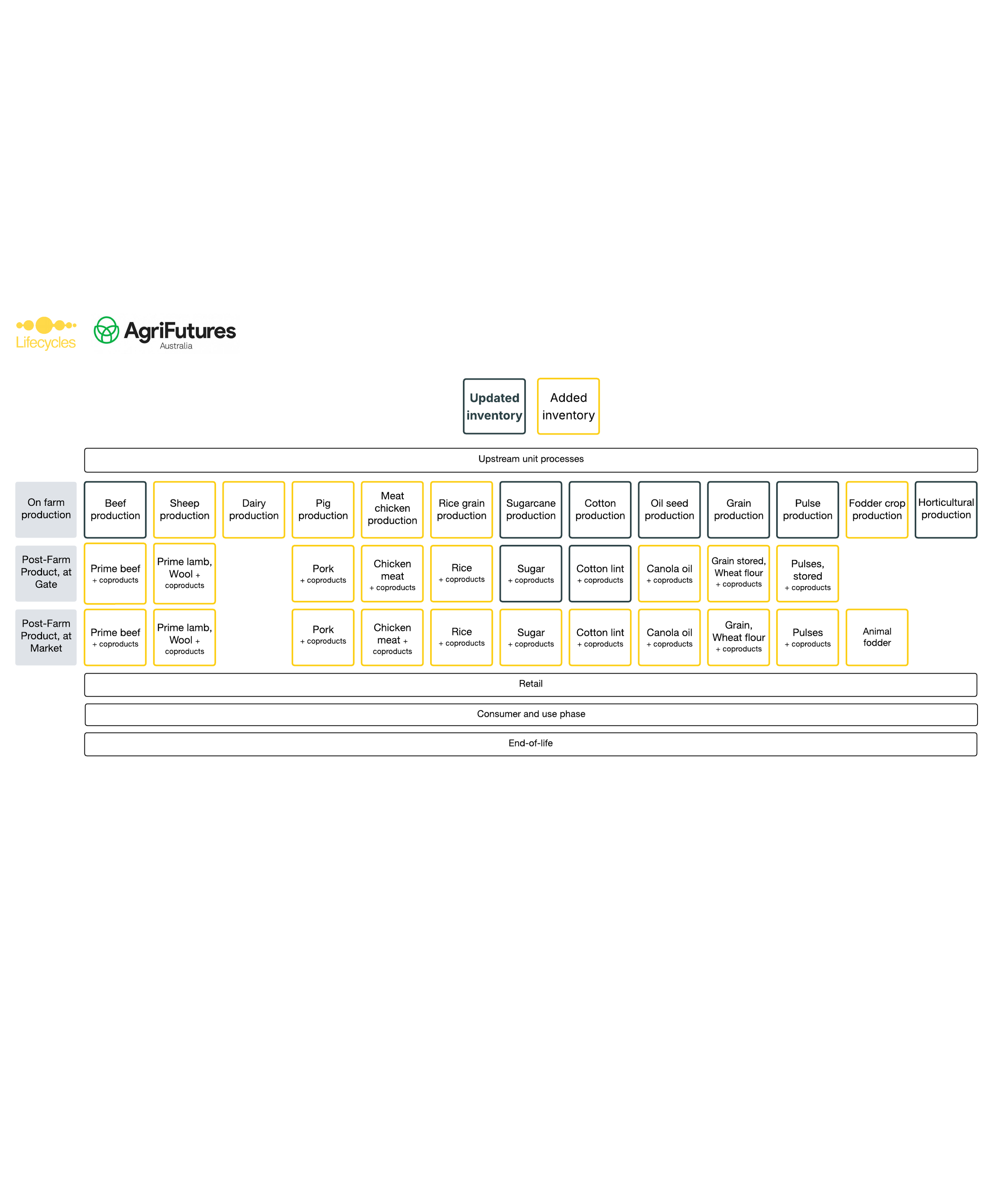
Figure 2. New and updated agriculture data in AusLCI
Figure 3. Data pathways and interoperability for agricultural data in AusLCI