
What is a Life Cycle Assessment?
A Life Cycle Assessment (LCA) is a method used to evaluate the environmental impacts of a product during all stages of its life cycle, from cradle to grave — including natural resources extraction through materials processing in the supply chain, manufacture, distribution, product use, maintenance and disposal.
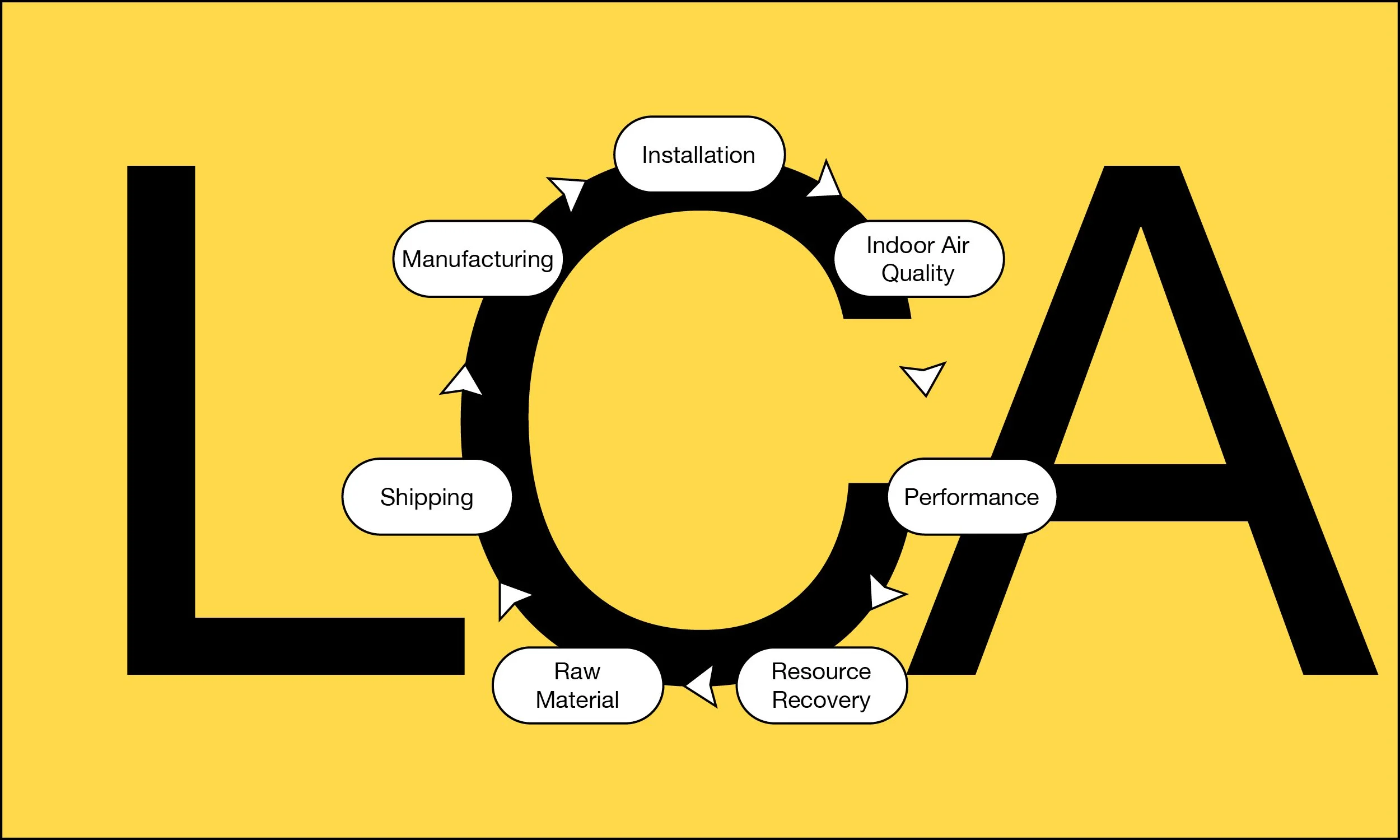
LCA is governed by international standards ISO 14040 and ISO 14044, which define the methodology and ensure that assessments are rigorous, transparent, and reproducible. It has become the foundational tool for sustainability measurement across industries — from agriculture and construction to packaging, energy, and consumer goods.
At Lifecycles, we’ve been conducting life cycle assessments for over 20 years, working with businesses, governments, and research organisations across Australia and internationally. Our work spans LCA consulting, LCA software and tools, LCA training, and life cycle inventory data development.
Why conduct an LCA?
Environmental intuition is often wrong. Many common assumptions about what’s “green” don’t hold up under scrutiny. Paper bags aren’t automatically better than plastic. Recycling isn’t always the lowest-impact option. “Natural” materials like cotton and leather can carry significantly higher impacts than their synthetic alternatives. LCA cuts through this environmental folklore with data.
Organisations conduct LCAs to:
Identify environmental hotspots — pinpointing which stage of a product’s life cycle contributes the most to impacts like carbon emissions, water use, or resource depletion
Improve product design — comparing design alternatives before committing to production, so sustainability is built in from the start rather than retrofitted
Support credible sustainability claims — backing up marketing and reporting with quantified, verifiable data rather than vague assertions
Meet regulatory and market requirements — including Environmental Product Declarations (EPDs), climate-related financial disclosures, and supply chain sustainability reporting
Inform policy and procurement decisions — helping governments and large organisations choose options based on evidence, not assumptions
Benchmark and track progress — establishing a baseline footprint and measuring improvement over time
For example, a product designer can use LCA to compare whether a switch from virgin plastic to recycled content actually reduces environmental impact across the full supply chain — or simply shifts the burden from one life cycle stage to another. A purchasing manager can evaluate which supplier’s materials carry the lowest footprint. A sustainability team can assess their entire product portfolio against carbon targets.
What are the four steps of an LCA?
LCA follows a standardised four-phase methodology defined by ISO 14040 and ISO 14044. This structure ensures consistency, transparency, and scientific rigour across all assessments.
-
Every LCA starts with clearly defining what you’re assessing and why. This step establishes:
The purpose of the study — is it for internal decision-making, product comparison, regulatory compliance, or public communication?
The functional unit — the reference basis for comparison. For example, “1,000 litres of packaged milk delivered to a retail store” rather than simply “a milk carton.” The functional unit ensures you’re comparing like with like.
System boundaries — which life cycle stages and processes are included. A cradle-to-gate study covers raw materials through to the factory gate; a cradle-to-grave study extends through use and disposal.
Assumptions and limitations — documented transparently so the results can be properly interpreted.
Getting this step right is critical. A poorly defined scope leads to results that can’t be meaningfully interpreted or compared.
-
The inventory phase involves collecting and quantifying all the relevant inputs and outputs across the product system. This includes:
Energy inputs — electricity, fuels, and thermal energy at each stage
Material inputs — raw materials, chemicals, water, and components
Emissions to air, water, and soil — greenhouse gases, particulates, heavy metals, and other pollutants
Waste and co-products — solid waste, wastewater, and any useful by-products
Data comes from a mix of primary sources (direct measurement from the manufacturer or supply chain) and secondary sources (life cycle inventory databases like AusLCI or ecoinvent). The quality of the inventory data directly determines the reliability of the results.
This is often the most time-intensive phase, particularly for complex supply chains. Tools like SimaPro and PIQET (Lifecycles’ own packaging LCA tool) streamline this process by connecting to established databases and automating calculations.
-
In the impact assessment phase, the inventory data is translated into environmental impact indicators. The raw flows of emissions and resources are classified and characterised into categories such as:
Global warming potential (carbon footprint) — measured in kg CO₂ equivalent
Acidification — the contribution to acid rain and soil acidification
Eutrophication — excess nutrients entering waterways
Water use and water scarcity
Resource depletion — consumption of finite mineral and fossil resources
Ecotoxicity and human toxicity
While carbon footprint is the most commonly reported indicator, a robust LCA looks across multiple categories to avoid burden-shifting — where reducing one impact simply increases another. For example, a material substitution that lowers carbon emissions but dramatically increases water use hasn’t genuinely improved sustainability.
-
The final phase brings the analysis together. Interpretation involves identifying significant findings, testing the robustness of results through sensitivity and uncertainty analysis, and drawing conclusions that directly address the study’s original goal.
ISO 14044 requires specific checks at this stage: completeness checks (have all relevant flows been captured?), sensitivity checks (do the conclusions change if key assumptions are varied?), and consistency checks (has the methodology been applied uniformly across the product systems being compared?).
The outcome is an evidence base that supports specific decisions — whether that’s selecting a lower-impact material, redesigning a product, informing procurement policy, or making a credible public sustainability claim.
The ISO 14044 standard describes several checks to test whether the data and the procedures you used to support your conclusions. This way, you can feel confident in your design or business decisions.
Types of life cycle assessment
The core LCA methodology can be applied in several ways depending on the question being asked:
Carbon footprint (Product Carbon Footprint) — a single-issue LCA focused specifically on greenhouse gas emissions. Governed by ISO 14067 and the GHG Protocol. Often the entry point for organisations new to LCA.
Water footprint — assessing freshwater consumption and impacts across the life cycle, following ISO 14046.
Environmental Product Declaration (EPD) — a standardised, third-party verified document that communicates the environmental performance of a product. EPDs follow ISO 14025 and product-specific rules (PCRs) to ensure comparability between products. Particularly prevalent in the construction sector in Australia.
Organisational LCA — assessing the environmental footprint of an entire organisation rather than a single product.
Social LCA — extending the life cycle approach to social impacts such as labour conditions, health, and community effects across the supply chain.
Comparative LCA — comparing two or more product systems that fulfil the same function, to determine which has a lower environmental impact.
Lifecycles delivers across all of these applications. Our EPD services and sustainability consulting help organisations choose the right approach for their goals.
Who uses LCA?
LCA is used across virtually every sector. In Australia, common applications include:
Agriculture and food — carbon footprinting of commodities, supporting market access (such as Australian canola meeting EU biofuel requirements), and informing on-farm improvement strategies
Packaging — comparing materials, optimising designs for lower impact, and meeting retailer and regulatory sustainability requirements
Construction and buildings — assessing embodied carbon in materials, supporting Green Star ratings, and producing EPDs for building products
Government and policy — informing waste management strategy, circular economy policy, and procurement guidelines with evidence-based metrics
Energy — evaluating renewable versus fossil fuel systems, bioenergy pathways, and grid decarbonisation scenarios
Consumer goods — product sustainability claims, Scope 3 emissions reporting, and eco-design
Lifecycles has worked with organisations including the Australian Government, state governments and global organisations. See our project portfolio for examples.
LCA software and tools
Conducting an LCA requires specialist software to model complex product systems and access life cycle inventory databases. The main tools used in Australia include:
SimaPro — the world’s most widely used LCA software, with access to multiple databases including ecoinvent, AusLCI, and industry-specific datasets. Lifecycles is an authorised SimaPro distributor in Australia and provides training, support, and bespoke configuration.
PIQET (Packaging Impact Quick Evaluation Tool) — Lifecycles’ own streamlined LCA tool purpose-built for packaging assessments. PIQET enables packaging designers and sustainability teams to run a full packaging LCA in under 30 minutes, with ISO 14044 compliant reporting built in.
LCA databases — the quality of an LCA depends on the quality of the underlying data. Lifecycles maintains and contributes to key Australian datasets including AusLCI (the national life cycle inventory database) and has contributed Australian agricultural data to the global ecoinvent database.
Explore our full range of LCA software and database products.
Getting started with LCA
If you’re new to life cycle assessment, there are several entry points depending on your needs:
01
Commission an LCA study
Work with an experienced consultancy like Lifecycles to conduct a rigorous assessment tailored to your specific question. This is the right approach when you need results for external communication, regulatory compliance, or strategic decision-making. Learn about our LCA consulting services.
Not sure where to start? Get in touch and we’ll help you identify the right approach for your goals.
02
Build in-house training capability
Our LCA training courses range from introductory courses for managers and designers through to advanced practitioner training on SimaPro. We also offer the Lifecycles Lab — intensive workshops where our consultants work alongside your team to analyse real product systems.
03
Use a streamlined or custom built tool
We build custom emission factor datasets and bespoke LCA tools. For packaging-specific assessments, PIQET provides an accessible way to run LCA assessments without needing deep LCA expertise. A 15-day free trial is available.
FAQs
What does LCA stand for?
1
LCA stands for Life Cycle Assessment. It is a standardised, science-based method for evaluating the environmental impacts of a product, service, or process across its entire life cycle — from raw material extraction through to end-of-life.
How much does an LCA cost?
2
The cost of an LCA depends on the complexity of the product system, the number of scenarios being compared, data availability, and whether the study is for internal use or external publication (which typically requires third-party review). A straightforward single-product LCA might take a few weeks; a complex multi-product study with primary data collection can take several months. Contact Lifecycles for a scoped estimate based on your specific needs.
What is the difference between an LCA and an EPD?
3
An LCA is the underlying analytical study. An Environmental Product Declaration (EPD) is a standardised document that communicates the results of an LCA in a format that enables product-to-product comparison. EPDs follow additional rules (Product Category Rules) and require third-party verification. Read our detailed comparison: LCA vs EPD explained.
What is a carbon footprint and how does it relate to LCA?
4
A carbon footprint is essentially a single-issue LCA focused on greenhouse gas emissions (measured in kg CO₂ equivalent). It follows the same life cycle methodology but reports only the global warming potential indicator. A full LCA goes further, assessing multiple impact categories to provide a more complete environmental picture. Read more: Scopes, carbon accounting and LCA explained.
The most widely used LCA software globally is SimaPro, which Lifecycles distributes and supports in Australia. For packaging-specific assessments, Lifecycles’ own tool PIQET provides a streamlined alternative. Other tools used internationally include openLCA (open-source) and GaBi. The choice depends on the scope of work and the user’s level of LCA expertise.