
Circular economy and material flow analysis
Measure what moves. Then measure why it matters.
Circularity without measurement is guesswork.
We use material flow analysis and LCA to quantify circular interventions, map resource flows, and identify where the real environmental gains sit. Our work has informed infrastructure investment, resource recovery policy and extended producer responsibility schemes across Australia.
From regional councils and water utilities to national reuse and e-waste programs, we give you the evidence base for better decision making on circularity.
What is material flow analysis (MFA)?
Material flow analysis quantifies how materials move through a defined system: a region, a city, an organisation or a supply chain. It answers one question: how much of what is flowing where? Put simply, what's moving where, what's coming in and what's going out.
An MFA tracks every input, stock and output. What comes in as virgin or recycled material. What accumulates in buildings, infrastructure and products. What leaves as product, waste, emissions or recovered resources.
It is built on mass balance: what goes in must come out or be stored. That discipline exposes data gaps and weak assumptions fast. We present results as Sankey diagrams, so decision makers can see the biggest flows and the biggest losses at a glance.
Mass tells you where materials go. It does not tell you what matters. A tonne of sand and a tonne of copper are not the same environmental problem.
That is why we pair MFA with life cycle assessment. LCA translates tonnes into impact across the full life cycle: climate change, water scarcity, resource depletion and more. Together, they show where circular action delivers real gains, and where it just moves the burden somewhere else.
The evidence backs this up:
Look beyond the kerbside bin. For Circular Central Victoria, mapping material flows and stocks across nine councils shifted the focus from kerbside recycling to how materials are consumed and transformed. That is where the region's biggest opportunities sat.
Tonnes alone miss the story. For Yarra Valley Water, we translated water, nitrogen and construction material flows into circularity, water scarcity and carbon footprint indicators, so the team could see the real hotspots before choosing solutions.
Mass, money and carbon together. For the Australian Government's e-product stewardship evidence report, we expressed electronic product flows by material type, dollar value and greenhouse gas emissions, giving policy makers one consistent evidence base.
Make reuse reportable. For Charitable Reuse Australia, we developed conversion factors for 40 commonly donated items, so reuse organisations can quantify and report their environmental benefit.
Measure, then keep measuring. Our annual LCA of ANZRP's TechCollect program has tracked the net environmental benefit of e-waste recycling every year since 2016.
Count jobs as well as carbon. For Green Industries SA, we quantified what a more circular South Australia could mean for jobs, emissions and energy use by 2030.
Circular is not automatically better
Circular economy is more than kerbside recycling. It is about designing waste out from the start and keeping materials in use at their highest value. Measurement tells you which levers to pull.
Our approach: three questions, three methods
We combine three methods so you get the whole picture, not just the tonnes.
| Method | The question it answers | What you get |
|---|---|---|
| Material flow analysis MFA | How much of what is flowing where? | A mass-balanced map of inputs, stocks and outputs |
| Life cycle assessment LCA | What are the environmental impacts of those flows? | Impacts across climate, water and resources, built on AusLCI and ecoinvent |
| Material circularity indicator MCI | How circular are the flows? | A baseline score, from the Ellen MacArthur Foundation method, to track progress against |
Our services
We work as the technical specialists behind circular economy decisions, quantifying what each option means for materials, emissions and the environment.
-
We map material flows and stocks across a region or municipality, then identify and quantify the opportunities with the biggest landfill diversion and emissions reduction. Clients include the City of Greater Bendigo, the City of Melbourne and Green Industries SA.
-
MFA, LCA and circularity indicators across your operations, suppliers and customers. You get a measurable starting point and a clear view of your hotspots. Clients include Yarra Valley Water and Monash University.
-
Before you invest, test it. We assess whether reuse, recycling, recycled content or a new recovery technology delivers a net environmental benefit. Clients include Fairview and the City of Charles Sturt.
-
Robust, repeatable data behind stewardship schemes, annual reporting and reuse calculators. Clients include ANZRP, Charitable Reuse Australia and the Australian Government.
-
Strategic research that underpins state circular economy policy, from priority sectors to metrics frameworks. Clients include the Victorian and Queensland governments.
Case studies
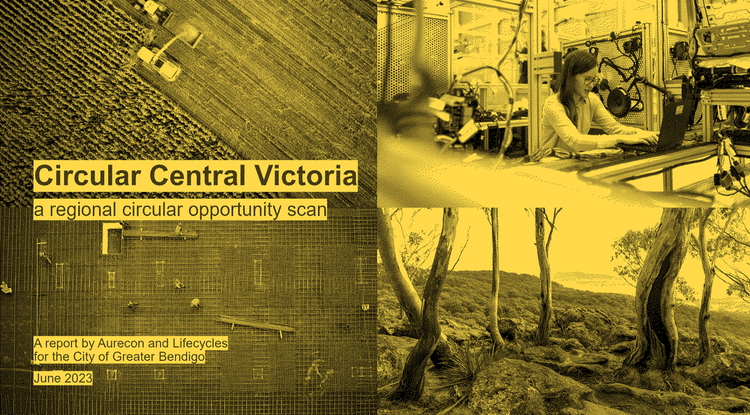
City of Greater Bendigo with Aurecon
Circular Central Victoria: regional circular economy scan
We mapped material flows and stocks across construction, consumer goods and agriculture for nine councils, identifying nine opportunities that could divert up to 688,000 tonnes of waste from landfill and cut up to 418,000 tonnes of CO₂e each year.
Read more
Yarra Valley Water
Circular economy framework for a water utility
We ran material flow analyses of water, nitrogen and construction materials across the utility, its suppliers and customers, then translated them into circularity, water scarcity and carbon footprint indicators to pinpoint hotspots.
Read more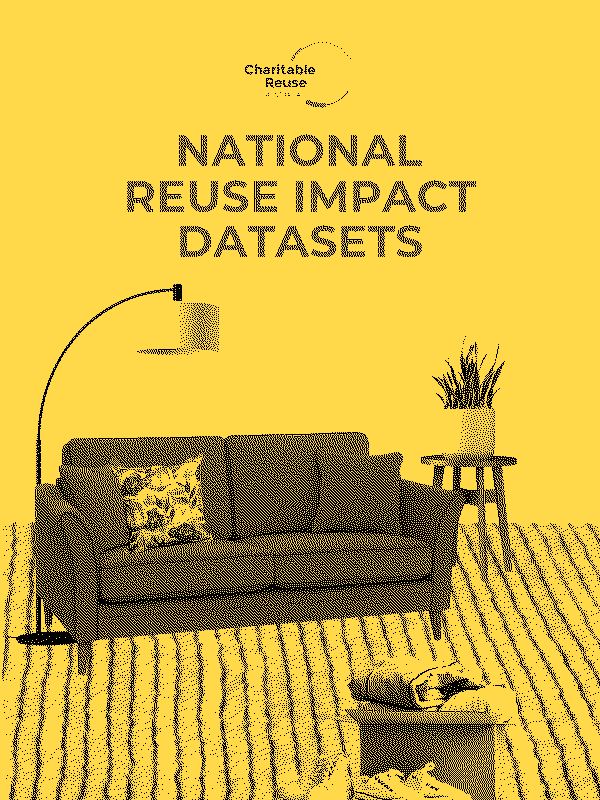
Charitable Reuse Australia
National Reuse Impact Dataset
With the NSW, Tasmanian and South Australian governments, we developed environmental conversion factors for 40 commonly donated items. Reuse of these items prevented an estimated 1.4 million tonnes of CO₂e in one year.
Read morePlanning a circular economy strategy?
Get in touch
FAQs
What is Material Flow Analysis (MFA)?
1
Material flow analysis is a method for quantifying the flows and stocks of materials through a defined system, such as a region, organisation or supply chain. It is based on mass balance and shows what comes in, what is stored and what goes out.
MFA measures mass: how much of each material moves where. LCA measures impact: what those flows mean for climate change, water, resources and other indicators across the full life cycle. MFA finds the big flows. LCA tells you which ones matter most environmentally.
2
What is the difference between MFA and LCA?
How do you measure circularity?
We use the material circularity indicator (MCI), developed by the Ellen MacArthur Foundation, which compares circular and linear flows into and out of a system. We pair it with LCA, so a higher circularity score is checked against real environmental impact.
3
Is a circular option always better for the environment?
4
No. Recycling, reuse and recycled content often deliver real benefits, but transport, energy and processing can reduce or reverse them. That is why we test circular interventions with LCA before you invest.
Who uses MFA?
5
State and local governments, water utilities, universities, manufacturers, retailers, product stewardship schemes and reuse organisations. Anyone who needs to know where their materials go, and where the opportunities to keep them in use sit.